Melbourne The Real Estate Weekly
Archives
Prices Up, Rents Tight, Coffee Strong — Welcome to Melbourne Property

Subscribe
Prices Up, Rents Tight, Coffee Strong — Welcome to Melbourne Property
Melbourne The Real Estate Weekly
Archives
Prices Up, Rents Tight, Coffee Strong — Welcome to Melbourne Property
Graham Harris
Feb 24, 2026
Welcome to the first-ever edition of Real Estate Weekly – Melbourne, where we cut through the chaos, quote the facts, and still find room for a bit of cheek.
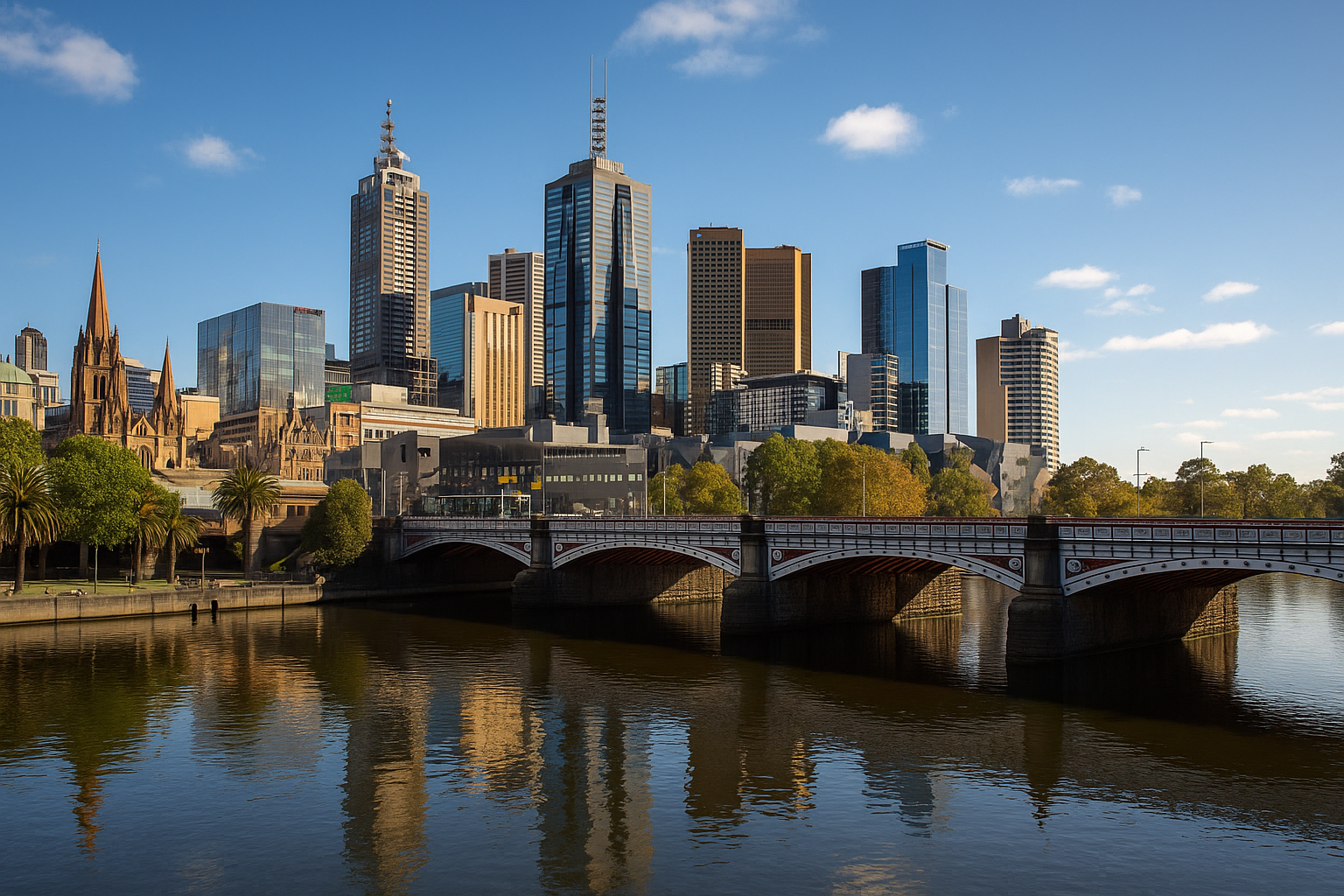
If you’ve been anywhere near a Melbourne open home lately, you’ll know the market feels like a latte that’s been sitting too long: still warm, still good, but missing a bit of froth.
Prices are steady, buyers are circling, and sellers are pretending not to panic.
This newsletter isn’t written by committee — it’s for locals who live, breathe, or occasionally swear at the Melbourne property market.
Expect numbers with personality, stories with soul, and the occasional raised eyebrow at the “experts.”
So grab a coffee (preferably single-origin, not single-interest-rate), and let’s dive in. |
 |
Market Pulse: A Spring Reboot, Not a Stampede |
Melbourne home values edged up 0.5 % in September nudging the median to just over $800. (Core Logic says $805,880)
Open-home crowds are back; some agents reckon inspections feel “2019 busy” again.
Outer suburbs like Cranbourne and Tarneit are steady rather than surging, which suits anyone who still wants a weekend without paperwork.
If this were footy, we’d call it quarter-time confidence: everyone’s still stretching, but the scoreboard’s finally moving.
💬 Been at a packed open lately? Tell us where — we’ll check the crowd numbers next week. |
Rate Reality: Relief on the Horizon |
The RBA held at 3.6 %, and for once, nobody panicked.
Brokers say refinance chats are up 20 % since winter.
It’s not boom-time optimism yet, but the sense that the worst might be behind us is creeping in.
If your rate starts with a 4, shout yourself an almond croissant — you’ve earned it. |
Coffee, Crowds & Clearance Rates |
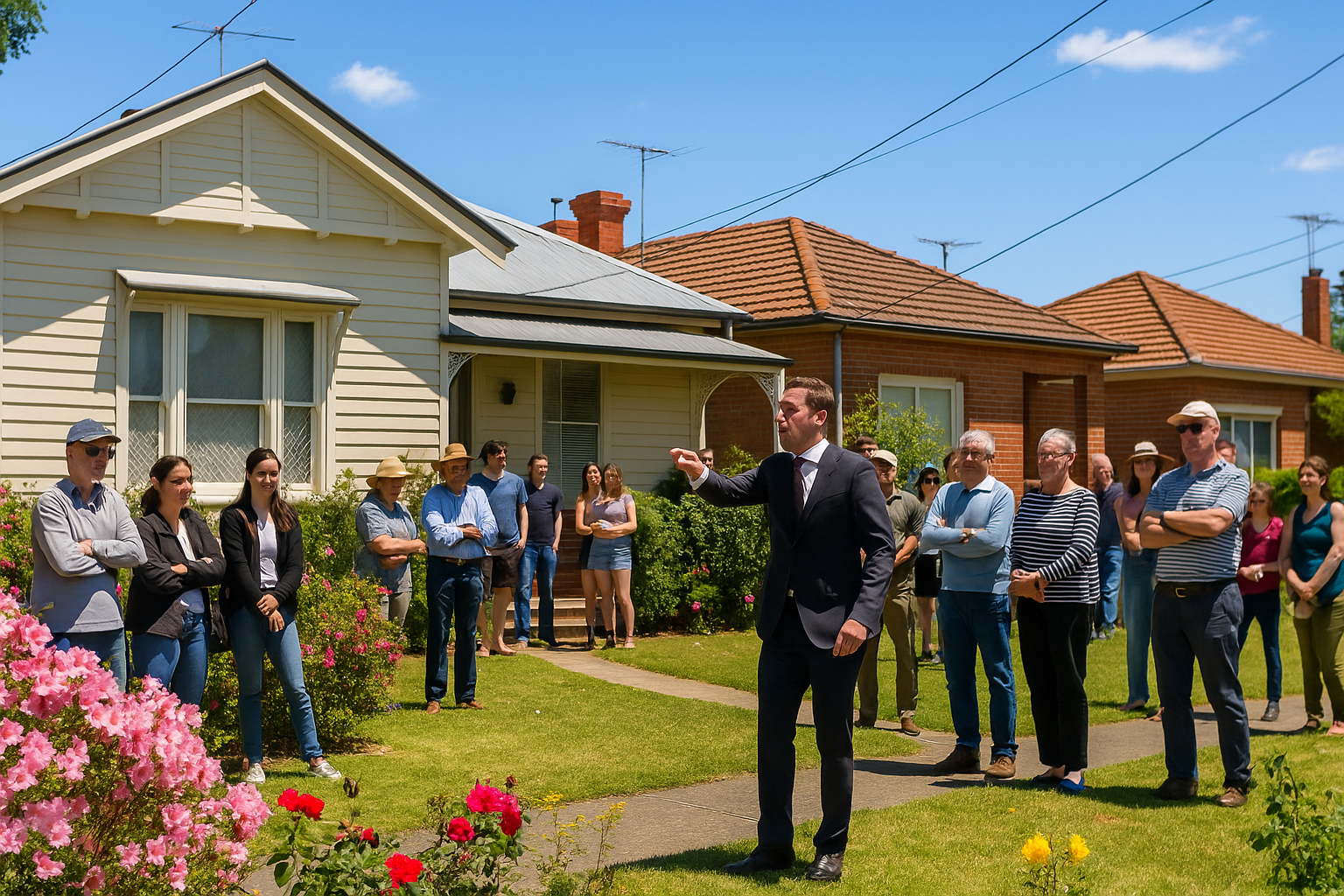 |
Melbourne ran about 1,300 auctions last weekend and roughly 83% of them sold very strong for spring. That tells you buyers are turning up and vendors are being realistic
A two-bedder in Elwood went for $1.27 million, helped, locals joked, by the “two excellent cafés within caffeine hit range.”
☕ Been bidding? Send us your auction stories — the funny ones beat the price records every time. |
The Investor Comeback |
 |
Investors aren’t shouting about it, but they’re definitely coming back.
PropTrack’s latest numbers show rents for units are up about 9% over the year, and rents for houses are up about 6%.
Because rents have jumped and prices haven’t taken off, the return on those investment places what property people call the “yield,” basically how much rent you get back compared with what the place is worth — is sitting around 5% in some pockets.
Vacancies are still under 1% across Melbourne, which is a fancy way of saying almost everything that’s for rent is getting taken.
So if you’ve got a unit in Docklands or Southbank right now, you’re probably not stressing.
A landlord in Footscray told us he’s had more rental applications than tradie quotes and that’s saying something.
After a couple of tough years, investors are keeping it simple:
No gold rush. Just steady, sensible returns.
💬 Seeing rental queues on your street? Send us a photo and the suburb — we’ll add it to next week’s Rental Reality. |
Renovation Nation: Smarter Spending |
Big makeovers might be on pause, but smaller renos are booming.
The sweet spot?
Kitchens, bathrooms, decks, and facelifts that make a place feel fresh without tearing it apart.
Paint, lighting, and landscaping are topping the list for quick value-adds, while major rebuilds are being shelved till confidence (and timber prices) improve.
💬 Thinking of freshening up your place before selling?
Tell us what you’re planning — we’ll ask local builders what’s actually adding value right now. |
Fishermans Bend’s Second Wind |
For years, Fishermans Bend felt like the project that never quite took off a planning zone bigger than the CBD but moving at the speed of a Sunday tram.
“The Victorian Government has released the Fishermans Bend Development Contributions Plan, which maps out about $2.65–2.7 billion of essential infrastructure roads, drainage, parks, open space to be delivered in stages through to 2055.
That’s the serious bit everyone was waiting for.
Transport is moving more slowly. The state’s plan talks about better buses first and tram extensions being planned and pushed for, but not with a firm “dig date” yet Port Phillip has been asking for clearer timelines. So: real progress, but not cranes tomorrow. The upside for early buyers and nearby suburbs (Port Melbourne, South Melbourne) is that the government has now said, in public, what it plans to spend — and on what. That makes the area look less like a ‘someday’ plan.”
💬 Know someone buying into Fishermans Bend? Ask them what’s changed — we’d love to feature a local voice next week. |
Ballarat’s Slow-Burn Comeback |
Ballarat isn’t roaring, but it’s definitely rumbling again.
PropTrack’s September 2025 figures show house prices up around 3 per cent over the past year, with the median now just shy of $590 000 a solid climb after two flat years.
Rental demand’s been even stronger: local agents report homes that used to sit for weeks are now snapped up within days, and vacancy sits at roughly 1 per cent.
The quiet revival started when Melbourne buyers began treating Ballarat as a realistic commute rather than a sea-change.
Two-day-a-week office rules, cheaper mortgages and decent Wi-Fi have made it work.
One agent summed it up neatly: “It’s not gold-rush stuff — it’s just people who’ve done the maths.”
New cafés and co-working hubs around Sturt Street are giving the city a fresher feel, but the mood’s still practical: value first, lifestyle second.
💬 Thinking of swapping city traffic for a Ballarat backyard? Tell us what’s pulling you west — we’ll share a few local tips next week.
|
Green & Gaining |
Eco-friendly homes aren’t just for idealists anymore — they’re starting to pay off in cold, hard value.
According to Domain’s Green Homes Report 2025, Melbourne listings that highlight features like solar panels, rainwater tanks, double glazing, or energy-efficient appliances are selling for about 5–7 per cent more on average than comparable homes without them.
Energy bills are a big part of it.
The Victorian Government’s Solar Homes program has now supported more than 300 000 rooftop installations, and the typical house cuts around $1 000 a year off power costs.
Buyers are noticing.
Agents from Preston to Pakenham say panels and good insulation now rank alongside kitchens and bathrooms as key selling points.
One agent in Footscray put it bluntly: “If it keeps the lights on cheaper, it’s worth more — simple as that.”
Developers are catching up too, adding EV charging points and efficient heating systems as standard.
What used to be a niche “green build” is quickly becoming the norm.
💬 Added solar or swapped to an efficient heat pump lately? Send us your before-and-after power bill — we’ll feature a real reader example next issue. |
Boutique Agencies Are Beating the Big Boys |
While the major brands are busy redesigning their logos, Melbourne’s boutique agencies are quietly eating their lunch.
Across suburbs like Coburg, Elsternwick and Kensington, smaller operators are outperforming on speed and sale price. Buyers know why: they actually call you back.
Ben, a property owner in Coburg, said switching to a one-agent outfit was “like changing from a call centre to a conversation.” His home sold in ten days.
These independents rely on local knowledge, sharper marketing and trust not bulk advertising budgets.
In a market built on relationships, the personal touch is proving worth far more than a bigger banner out front.
💬 Run or know a great local agency doing it right?
Drop us a line — we like people who back service over spin. |
The Stamp Duty Saga: Still Going, Still Confusing |
The state’s stamp-duty-to-annual-tax shuffle is crawling through Treasury slower than a tram on Swanston Street in peak hours.
On paper, it’s simple: scrap the huge upfront hit, replace it with a smaller yearly charge.
In reality, the modelling looks like a Year-10 algebra exam.
The Victorian Government insists it’ll make housing “fairer”; accountants quietly pray for early retirement.
Treasury estimates a 1 % bump in property transactions if it ever lands.
Buyers like the flexibility, sellers like the idea of more turnover, and everyone else is just waiting to see who blinks first.
Elly from Pascoe Vale summed it up: “Happy to pay either way — I just want to know which way before I bid.”
💬 Think this tax swap will help or hurt? Tell us — we’ll tally the votes in next week’s wrap. |
Where the Bargains Actually Live |
If you’re still dreaming of buying within Melbourne’s borders, don’t give up just yet there are still pockets where prices haven’t gone completely feral.
CoreLogic’s latest suburb data shows Sunshine North, Craigieburn and Officer among the few still sitting under $650 000 for houses, while Werribee, Melton South and Pakenham continue to hover just above that line.
What makes them interesting isn’t just price it’s infrastructure.
One local agent in Werribee said, “Buyers aren’t chasing bragging rights anymore — they’re chasing floor space.”
If you’re willing to drive twenty minutes more than you’d like, you can still land a decent home and maybe even keep a coffee budget.
💬 Found a suburb you think is still undervalued? Tip us off — we’ll run it through the data and see if you’re right. |
Metro Tunnel Countdown |
The Metro Tunnel opens to passengers in early December 2025 on a lighter ‘summer start’
timetable trains every 20 minutes in the middle of the day and then the full ‘big switch’ kicks in 1 February 2026 with the new timetable and extra services.
So yes, better cross-city trips are coming, but it’s staged, not all at once..
Commute times could drop by 15 minutes east-to-west, linking Kensington, Parkville and Arden to the CBD.
Local agents are already talking it up; listings near new stations are getting an early glow.
Rita in North Melbourne says, “If a train actually goes through, I’m raising my rent.”
💬 Got property near a future station? Send us a photo — we’ll chart how the skyline changes once trains roll. |
The Construction Comeback |
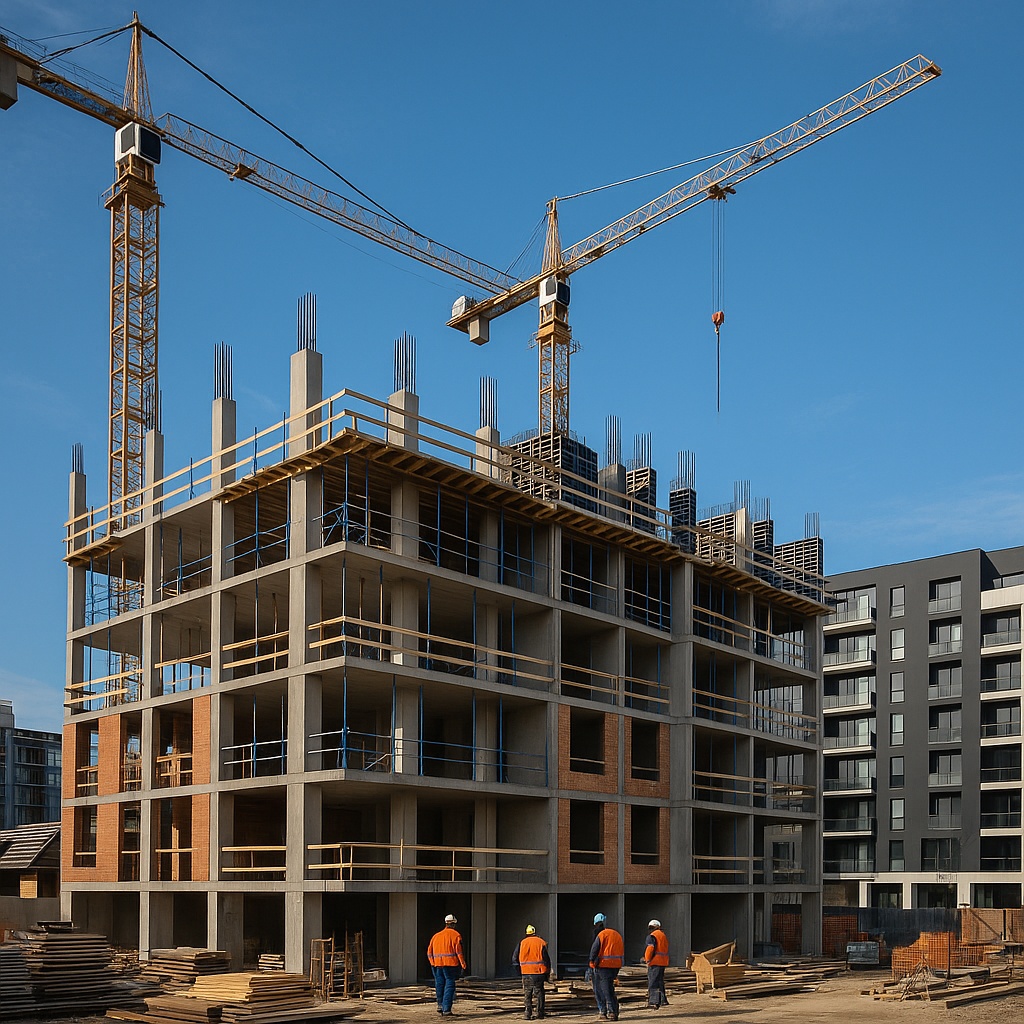 |
If you’ve looked up lately, you’ll have noticed Melbourne’s skyline getting busier again.
After a rough couple of years, the cranes are back cautiously, but they’re back.
ABS data shows new home approvals in Victoria up about 6% on last quarter, the first proper lift since early 2023.
Builders say confidence is slowly returning as material prices ease and supply chains behave themselves.
One developer in Footscray said, “At least we can get plasterboard without planning a holiday while we wait for it.”
What’s really changed is focus: fewer huge apartment towers, more medium-density townhouses and infill projects where people actually want to live.
The government’s latest housing push has fast-tracked some smaller permits to keep trades working and renters from being priced out.
That mix steadier costs, smarter builds, and demand that’s still red-hot is giving construction its second wind.
💬 Seen cranes back in your suburb? Snap a photo and tag us — we’ll feature “builds to watch” next week. |
Green Mortgage Momentum |
Remember when “eco-home loans” sounded like marketing nonsense?
They’re now serious business — and a quiet win for anyone building or upgrading sustainably.
Most of the big lenders — CBA, NAB, ANZ, Westpac, and Bendigo Bank — are still running green-loan discounts of around 0.25–0.4 percentage points for homes that meet energy-efficiency or solar standards.
Rachel and Tom in Glen Waverley just finished their build seven-star rating, solar, water tank and said the green-loan discount will save them “about the cost of a new fridge every year.”
Banks love it because these borrowers rarely default, and buyers love it because “sustainable” finally means “affordable.”
💬 Got a green-loan story of your own? Tell us what made you switch — we’ll feature a few real savings next issue. |
Beyond the CBD |
You don’t have to look far beyond the tram tracks to see where Melbourne’s real growth is happening.
PropTrack’s latest figures show outer-metro house prices up 4–5 per cent over the past year, while some inner zones barely moved.
Local buyers say it’s not just price — it’s people.
Developers are catching up with new retail hubs and schools, and the state’s infrastructure plan is quietly doing its job new stations at Tarneit West, Truganina and Clyde are now fully funded and due to open mid-2026.
The result?
A belt of suburbs that used to be overlooked are suddenly feeling like the main event.
💬 Living beyond the ring road? Tell us what’s changed — best comment lands a shout-out next issue. |
Gavel Gossip: Auction Moments Worth Sharing |
If you think auctions are all nerves and numbers, you haven’t been paying attention.
Melbourne’s spring season has been full of the kind of moments you can’t make up.
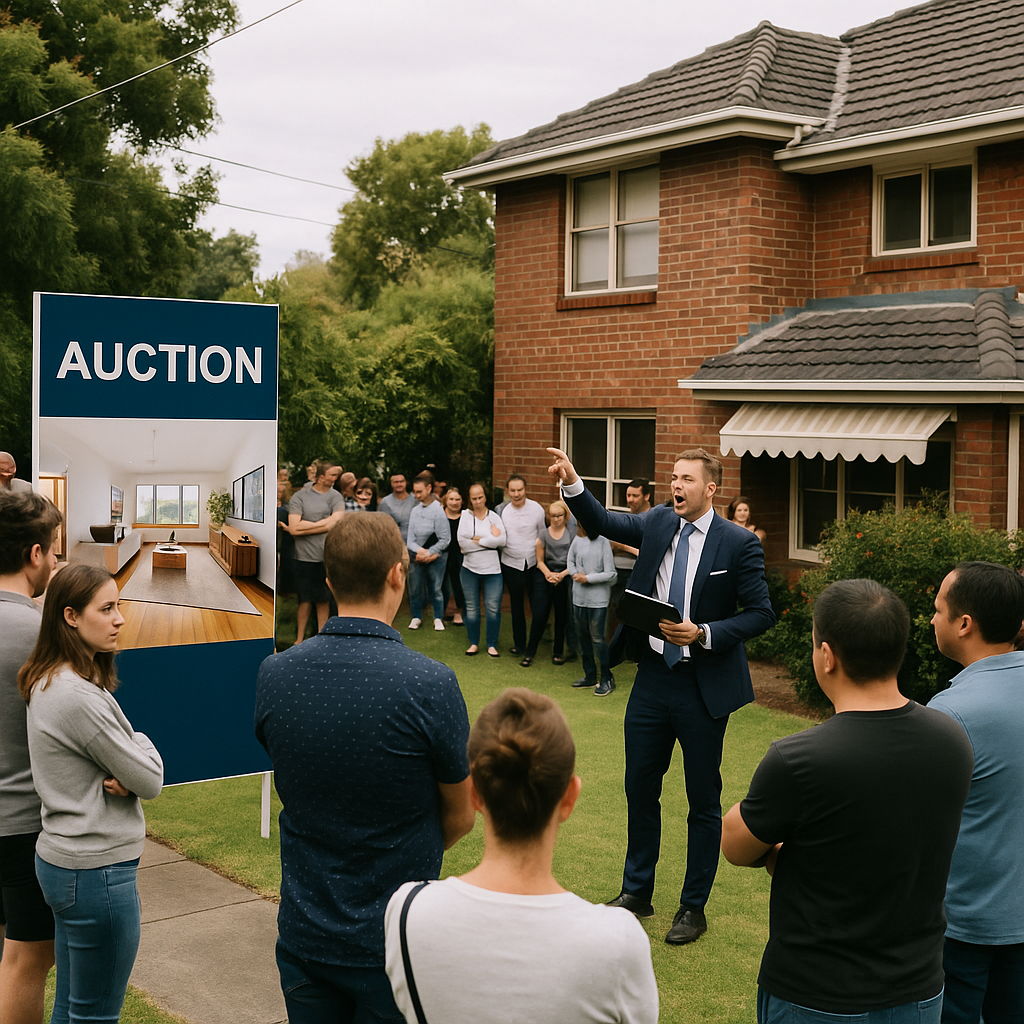
At a recent Glen Iris auction, the opening bid was so low the crowd laughed until the bidder grinned and said, “Hey, it worked last year.” (It didn’t.)
Across the city, clearance rates are sitting in the low-80s and the banter’s back along with the crowds.
Whether you’re bidding, spectating or just there for the free coffee cart, auctions have their own weird charm half theatre, half stress test.
💬 Seen or heard a classic auction moment? Tell us we’ll share the funniest ones next issue (no names, promise). |
 |
Investor Toolkit: What to Listen To (and Why) |
Looking for smarter commutes between opens?
Add these to the queue:
Melbourne investor Lila told us, “Half of what I know about the market I’ve picked up between Coles and the car park podcasts make the jargon make sense.”
💬 Got a favourite listen that helped you level up your property game? Send it in — we’ll feature our readers’ top picks next issue. |
Rental Reality: Tight as a Drum, But Shifting at the Edges |
 |
If you’re renting in Melbourne, you don’t need stats to know it’s tough — but the numbers tell the same story.
SQM Research’s October read shows Melbourne’s vacancy rate hovering around 1.1%, one of the lowest on record.
But something’s changing. In a few outer suburbs Tarneit, Cranbourne West, and Epping new builds are quietly easing the pressure.
Vacancy there has ticked up to about 1.6%, giving renters a rare bit of breathing space.
In the inner city, though, it’s still a scramble.
Experts reckon the rental market might finally be past peak squeeze, but no one’s calling it relaxed yet.
💬 Seen a rental finally sit vacant for more than a week? Tell us where — we’ll track the shift next issue. |
Café & Living: Why Homes Near Good Coffee Still Score |
 |
There are hundreds of metrics to value a home — median price, transport, schools but Melbourne buyers quietly care about one more: flat-white proximity.
A Domain lifestyle survey found that more than 60% of buyers rank a good café within walking distance as “essential.”
Cafés bring people out of their houses and into conversations, and that energy adds something you can’t price.
In Brunswick, one agent joked, “If you can smell beans roasting, you’ve already added twenty grand.”
So next time you’re scouting real estate, don’t just check the floorplan — check the coffee.
|
Your Weekly Wrap-Up |
That’s a wrap for our first Melbourne edition.
We’ve got auctions buzzing again, rents shifting at the edges, and even a few cranes back on the skyline.
The city feels alive and that’s exactly the Melbourne we love.
Next week we’ll dig into first-home buyer survival strategies, a closer look at regional hotspots beyond Ballarat, and real stories from renters finally landing a place.
Until then, enjoy the sunshine, support your local café, and keep your eye on the market not the noise.
💬 Spotted a story, stat or suburb we should feature? Hit reply or tag us on socials — your insight might just make next week’s issue. |
All content is locally verified and based on reliable market data from trusted Australian sources. We double-check every figure before publication — so you can count on what you read here.
Figures are accurate at the time of publication but may change as new data becomes available.
💬 Got a local story, listing, or insight?
Join our weekly update
Contact: hello@melbourne.therealestateweekly.com
|
